📖 5 min read
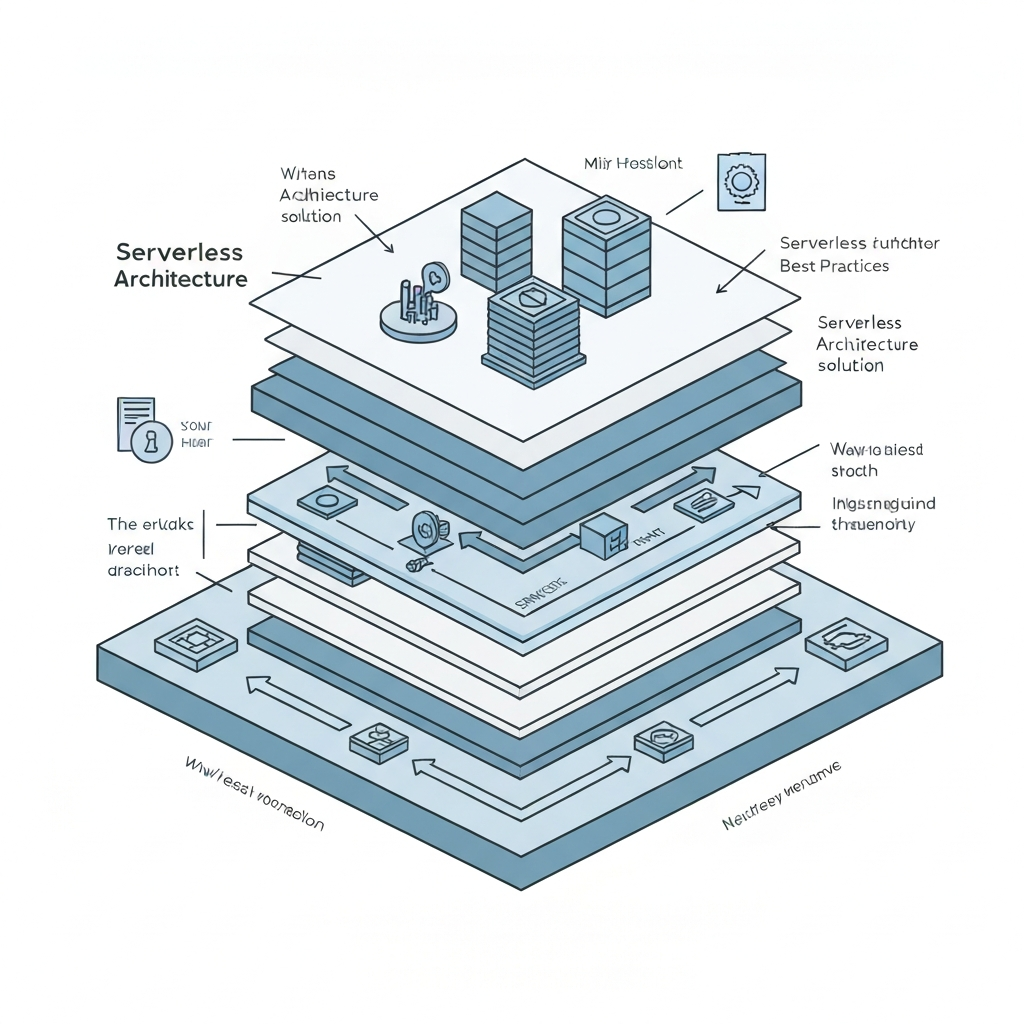
The shift towards serverless architecture represents a fundamental change in how we build and deploy applications. No longer burdened with managing servers, developers can focus on writing code and delivering value. This paradigm is particularly relevant for Python Django and FastAPI developers building RESTful APIs. This article delves into the best practices for embracing serverless, maximizing its benefits while mitigating potential challenges. We'll explore topics ranging from function design and API Gateway integration to database optimization and security considerations, equipping you with the knowledge to build robust, scalable, and cost-effective serverless solutions. Ultimately, mastering serverless principles unlocks significant advantages in speed, agility, and resource utilization, empowering your development team to innovate faster and more efficiently.
1. Embracing Function-as-a-Service (FaaS) Principles
At the core of serverless architecture lies the Function-as-a-Service (FaaS) model. FaaS allows you to deploy individual functions that are triggered by specific events, such as HTTP requests, database changes, or scheduled tasks. This event-driven approach enables fine-grained control over resource allocation and scaling. Understanding the fundamental principles of FaaS is crucial for designing efficient and maintainable serverless applications.
One key principle is designing functions that are stateless and idempotent. A stateless function doesn't rely on persistent data between invocations, making it easier to scale and manage. Idempotency means that executing the same function multiple times with the same input will produce the same result, even if there are errors or retries. This is particularly important for handling asynchronous events and ensuring data consistency. For example, a function that processes payments should be idempotent to prevent duplicate charges in case of network failures. Using unique transaction IDs and checking for existing records before processing are common strategies for ensuring idempotency.
Another important consideration is function size and execution time. FaaS platforms typically impose limits on these factors. Optimizing your code to minimize memory usage and execution time is essential for maximizing performance and minimizing costs. Profiling your code, using efficient data structures, and avoiding unnecessary dependencies can significantly improve function efficiency. Furthermore, consider breaking down complex tasks into smaller, more manageable functions to adhere to these limitations and improve overall system modularity.
2. RESTful API Design and Gateway Integration
Serverless architectures are particularly well-suited for building RESTful APIs. API Gateways act as a central point of entry for all API requests, routing them to the appropriate serverless functions. Proper API design and gateway integration are crucial for creating scalable and secure APIs. Considerations for API design and integration include authentication, authorization, request validation, rate limiting, and request transformation.
- API Versioning: Implementing API versioning allows you to introduce changes to your API without breaking existing clients. This can be achieved through URL path versioning (e.g., `/v1/users`, `/v2/users`), header-based versioning (e.g., `Accept: application/vnd.example.v2+json`), or query parameter versioning (e.g., `/users?version=2`). Each method has its trade-offs, but URL path versioning is generally considered the most RESTful. Clearly documenting each version's changes is vital for developers adopting the newer versions.
- Authentication and Authorization: Securing your APIs is paramount. Use industry-standard authentication protocols like OAuth 2.0 or JWT (JSON Web Tokens) to verify the identity of clients. Implement proper authorization mechanisms, such as role-based access control (RBAC), to control access to specific resources based on user roles or permissions. API Gateways often provide built-in support for authentication and authorization, simplifying the process. A strong policy enforcement point ensures only authorized entities can access specific API endpoints and their respective data.
- Rate Limiting and Throttling: Protecting your API from abuse and ensuring fair usage requires rate limiting and throttling. Rate limiting restricts the number of requests a client can make within a specific time window. Throttling limits the overall throughput of your API to prevent overload. API Gateways typically offer configurable rate limiting and throttling policies based on IP address, API key, or user identity. These mechanisms are essential for maintaining API stability and preventing denial-of-service attacks.
3. Database Optimization for Serverless
Optimize database interactions: Minimize database connections and leverage connection pooling for efficient resource management.
Serverless functions often interact with databases to store and retrieve data. Database interactions can be a significant bottleneck in serverless applications. Optimizing database interactions is crucial for achieving optimal performance and minimizing costs. This involves strategies such as connection pooling, query optimization, and data caching.
Connection pooling allows you to reuse database connections, avoiding the overhead of establishing a new connection for each function invocation. Most database drivers provide built-in support for connection pooling. Query optimization involves writing efficient SQL queries that minimize the amount of data retrieved from the database. Using indexes, avoiding full table scans, and selecting only the necessary columns can significantly improve query performance. Using an ORM like Django's or SQLAlchemy can help you write more maintainable and portable code, but it's crucial to understand the generated SQL to optimize its efficiency. Monitoring query execution plans can identify bottlenecks and areas for improvement. Additionally, consider using database-specific features like stored procedures or materialized views for complex data transformations or aggregations.
Data caching can further reduce database load by storing frequently accessed data in memory. Caching can be implemented at the function level, using in-memory caches, or at the API Gateway level, using caching proxies. Redis and Memcached are popular choices for implementing distributed caching. When implementing caching, it's essential to consider cache invalidation strategies to ensure data consistency. Time-to-live (TTL) settings, cache busting techniques, and event-driven cache invalidation are common approaches. By optimizing database interactions, you can significantly improve the performance and scalability of your serverless applications while reducing database costs.
🔗 Recommended Reading
Conclusion
Adopting serverless architecture requires a shift in mindset and a focus on best practices. By embracing FaaS principles, designing RESTful APIs with proper gateway integration, and optimizing database interactions, you can unlock the full potential of serverless and build highly scalable, cost-effective, and maintainable applications. Embracing these principles empowers you to focus on your core business logic, rather than infrastructure management, leading to increased agility and faster time-to-market.
The serverless landscape is constantly evolving, with new tools and services emerging regularly. Staying up-to-date with the latest trends and best practices is essential for maximizing the benefits of serverless. Future trends include increased adoption of edge computing, serverless containers, and AI-powered serverless applications. Continual learning and experimentation are crucial for mastering serverless and leveraging its transformative power.
❓ Frequently Asked Questions (FAQ)
What are the key differences between serverless and traditional architectures?
In traditional architectures, you manage servers, operating systems, and infrastructure components directly. Serverless abstracts away these concerns, allowing you to focus solely on writing code. Traditional architectures require manual scaling and capacity planning, whereas serverless platforms automatically scale based on demand. Furthermore, serverless adopts a pay-per-use model, offering significant cost savings compared to the fixed costs associated with traditional server deployments, where you're paying for idle resources. The reduced operational overhead and automated scaling are the prime differentiators that shift focus to development rather than maintenance.
How do I handle dependencies in serverless functions?
Dependencies in serverless functions are typically managed using package managers like pip for Python or npm for Node.js. You can include a `requirements.txt` file (for Python) or a `package.json` file (for Node.js) that lists all the necessary dependencies. When you deploy your function, the FaaS platform will automatically install these dependencies. To optimize function size and cold start times, it's crucial to minimize the number of dependencies and use lightweight alternatives whenever possible. Consider using dependency layers, where common dependencies are bundled into a separate layer that can be shared across multiple functions, reducing deployment package size and improving deployment speed.
What are some strategies for monitoring and debugging serverless applications?
Monitoring and debugging serverless applications require a different approach than traditional applications. Centralized logging is crucial, as logs are often distributed across multiple function invocations. CloudWatch Logs (AWS), Azure Monitor Logs (Azure), and Google Cloud Logging (GCP) are common choices. Distributed tracing tools like X-Ray (AWS), Azure Monitor Application Insights (Azure), and Google Cloud Trace (GCP) help you track requests across multiple services and identify performance bottlenecks. Implementing structured logging, adding correlation IDs to requests, and using metrics dashboards are essential for effective monitoring and debugging. Regularly reviewing logs, setting up alerts for critical errors, and using debugging tools specific to your FaaS platform are best practices for maintaining application health.
Tags: #Serverless #Architecture #FaaS #Python #Django #FastAPI #API