📖 10 min read
In today's fast-paced digital landscape, the performance of web applications is paramount. Slow loading times and inefficient data fetching can lead to frustrated users and lost business. Choosing the right API architecture is a critical decision for backend developers, and the debate often centers around GraphQL and REST. REST (Representational State Transfer) has been the dominant architectural style for many years, but GraphQL, developed by Facebook, offers a compelling alternative that aims to address some of REST's limitations. This comprehensive guide dives deep into the performance aspects of GraphQL and REST, providing a detailed comparison to help you make informed decisions for your projects. We'll explore data fetching strategies, caching mechanisms, and real-world scenarios to highlight the strengths and weaknesses of each approach, focusing on server-side logic and database architecture considerations.
1. Understanding REST API Performance
REST APIs are designed around resources, identified by URLs, and utilize standard HTTP methods (GET, POST, PUT, DELETE) to interact with these resources. A key characteristic of REST is that it often results in over-fetching or under-fetching of data. Over-fetching occurs when the API returns more data than the client actually needs, wasting bandwidth and processing power. Under-fetching happens when the client needs to make multiple requests to different endpoints to retrieve all the required data, increasing latency and complexity.
Consider an e-commerce application where a client needs to display a product's details, including its name, price, description, and reviews. A typical REST API might have an endpoint `/products/{id}` that returns all product information, including fields the client doesn't need for this particular view. Furthermore, fetching the reviews might require a separate request to `/products/{id}/reviews`. This necessitates multiple round trips between the client and the server, each incurring network overhead. The performance impact becomes more significant with complex data models and deeply nested relationships.
To mitigate these issues, REST APIs can implement techniques such as pagination, filtering, and sparse fieldsets. Pagination limits the number of results returned in a single request, reducing the amount of data transferred. Filtering allows clients to specify criteria to narrow down the results, reducing the size of the response. Sparse fieldsets enable clients to request only the specific fields they need, minimizing over-fetching. However, these techniques add complexity to both the client and server implementations and require careful design to avoid introducing new performance bottlenecks. Furthermore, versioning becomes important as APIs evolve, adding another layer of complexity in maintaining backward compatibility.
2. Unveiling GraphQL API Performance
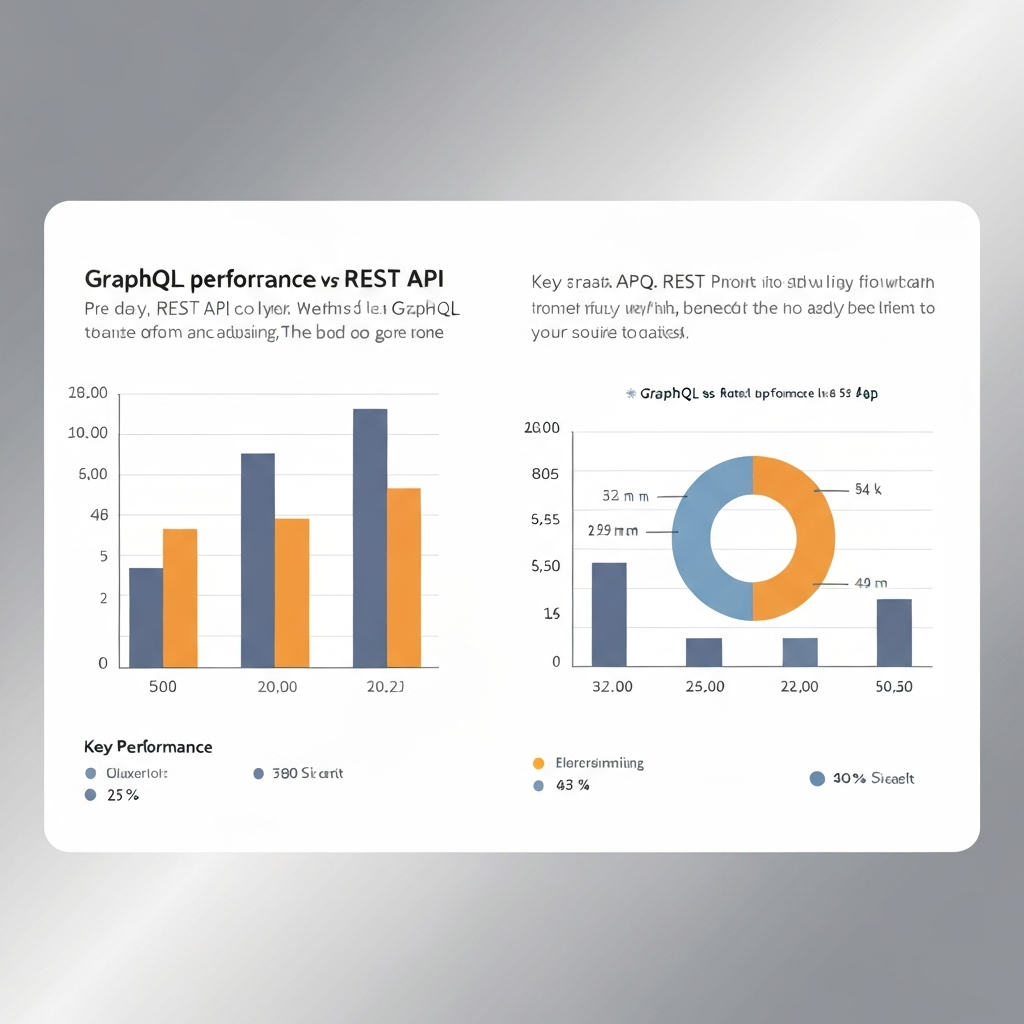
GraphQL, on the other hand, takes a different approach by allowing clients to specify exactly the data they need in a single request. This is achieved through a query language that allows clients to define the structure of the response they want to receive. The GraphQL server then fetches only the requested data, eliminating over-fetching and reducing the number of round trips. This client-driven data fetching paradigm is a significant advantage in terms of performance and efficiency.
- Reduced Network Overhead: GraphQL minimizes network overhead by transferring only the necessary data. In contrast to REST, where you might receive a large payload with unused fields, GraphQL provides precisely what the client asks for. This results in smaller response sizes, faster loading times, and reduced bandwidth consumption, especially beneficial for mobile devices and low-bandwidth connections.
- Elimination of Over-Fetching: One of the most significant performance benefits of GraphQL is the elimination of over-fetching. By specifying the exact fields required in the query, the client avoids receiving unnecessary data, leading to more efficient data transfer and processing. This is particularly advantageous when dealing with complex data models and nested relationships, where REST APIs often struggle with over-fetching issues.
- Single Endpoint Access: GraphQL typically exposes a single endpoint, which simplifies API management and reduces the complexity of client-side data fetching. Instead of managing multiple endpoints for different resources, clients interact with a single GraphQL endpoint, sending queries that define the data they need. This streamlined approach simplifies development and reduces the risk of errors associated with managing multiple API endpoints.
3. Performance Comparison in Practice
When implementing GraphQL, consider using data loaders to batch and deduplicate requests to the database. This can significantly improve performance by reducing the number of database queries.
While GraphQL offers performance advantages in many scenarios, it's important to consider the specific use case and the complexity of the data model. In simple cases where the client only needs a small amount of data from a single resource, the overhead of parsing and executing a GraphQL query might outweigh the benefits. REST APIs can be more efficient in these situations, especially if caching is effectively implemented.
For complex applications with intricate data relationships and diverse client requirements, GraphQL often provides a significant performance boost. The ability to fetch precisely the required data in a single request reduces network overhead and minimizes the number of round trips to the server. This leads to faster loading times and a more responsive user experience. Furthermore, GraphQL's schema introspection capabilities allow clients to discover the available data and relationships, simplifying development and reducing the risk of errors.
Ultimately, the choice between GraphQL and REST depends on the specific needs of the application. REST is a well-established and widely understood architectural style that is suitable for simple APIs with predictable data requirements. GraphQL is a more flexible and efficient alternative for complex applications with diverse client needs and intricate data relationships. By carefully considering the trade-offs between these two approaches, developers can choose the API architecture that best optimizes performance and enhances the user experience.
Conclusion
In conclusion, both GraphQL and REST APIs have their own strengths and weaknesses regarding performance. REST, while widely adopted, can suffer from over-fetching and under-fetching, leading to inefficient data transfer. GraphQL addresses these limitations by allowing clients to specify their data requirements precisely, reducing network overhead and improving loading times, especially crucial for large-scale applications handling massive datasets.
The decision between GraphQL and REST should be based on a thorough evaluation of the application's requirements, data complexity, and performance goals. While GraphQL often provides performance advantages in complex scenarios, REST remains a viable option for simpler APIs. As technology evolves, the API landscape will continue to adapt, so staying informed about the latest trends and best practices is essential for building high-performance web applications.
❓ Frequently Asked Questions (FAQ)
What are the main performance bottlenecks in REST APIs?
The primary performance bottlenecks in REST APIs often stem from over-fetching and under-fetching of data. Over-fetching occurs when the API returns more data than the client needs, wasting bandwidth and processing power. Under-fetching, on the other hand, requires the client to make multiple requests to different endpoints to retrieve all the necessary data, increasing latency and complexity. These issues can be exacerbated by inefficient caching strategies and poorly optimized database queries.
How does GraphQL prevent over-fetching?
GraphQL prevents over-fetching by allowing clients to specify exactly the data they need in a single query. The GraphQL server then fetches only the requested data from the database, eliminating the transfer of unnecessary fields. This client-driven data fetching paradigm ensures that only the required data is transferred, reducing network overhead and improving loading times. The client defines a schema requesting specific fields, which results in a leaner, more efficient response.
What are the potential drawbacks of using GraphQL for performance?
While GraphQL offers performance advantages in many scenarios, it also has potential drawbacks. For simple APIs with predictable data requirements, the overhead of parsing and executing a GraphQL query might outweigh the benefits. Additionally, implementing proper caching strategies in GraphQL can be more complex than in REST. Query complexity and depth can also lead to performance issues if not properly managed, requiring measures such as query cost analysis and rate limiting.
Tags: #GraphQL #RESTAPI #APIPerformance #BackendDevelopment #WebAPI #APIDesign #SoftwareEngineering