📖 5 min read
In the world of modern web development, APIs are the backbone of communication between different systems. Django REST Framework (DRF) has emerged as a powerful and flexible toolkit for building RESTful APIs with Python and Django. However, a well-designed API is only as good as its security. Properly implemented authentication schemes are crucial for verifying the identity of users and ensuring that only authorized clients can access your API's resources. Neglecting authentication can expose sensitive data and leave your application vulnerable to attacks. This post will cover a detailed overview of authentication schemes in Django REST Framework.
1. Introduction to Authentication in Django REST Framework
Authentication in DRF is handled by authentication classes, which determine how the incoming request is authenticated. DRF provides a set of built-in authentication classes, and it also allows you to create custom authentication schemes to meet specific requirements. These authentication classes are responsible for verifying the credentials provided in the request and associating a user with the request. A successful authentication process allows the request to proceed, whereas a failed authentication will result in an HTTP 401 Unauthorized or 403 Forbidden error.
DRF's pluggable authentication system makes it easy to integrate different authentication methods into your API. You can configure the default authentication classes globally in your settings file or specify them on a per-view basis using the `authentication_classes` attribute. The order in which these classes are defined matters, as DRF will iterate through them until one successfully authenticates the request. This flexibility allows you to combine multiple authentication methods to cater to different client types or security requirements.
Consider a scenario where you want to offer both token-based authentication for mobile apps and session-based authentication for web browsers. By configuring both `TokenAuthentication` and `SessionAuthentication` in your API settings, DRF will attempt to authenticate the request using the token first. If no token is provided or the token is invalid, it will then try to authenticate the request using the session. This approach provides a seamless experience for both types of clients while ensuring that only authenticated users can access your API endpoints. You must also secure the backend API server properly to avoid man-in-the-middle attacks.
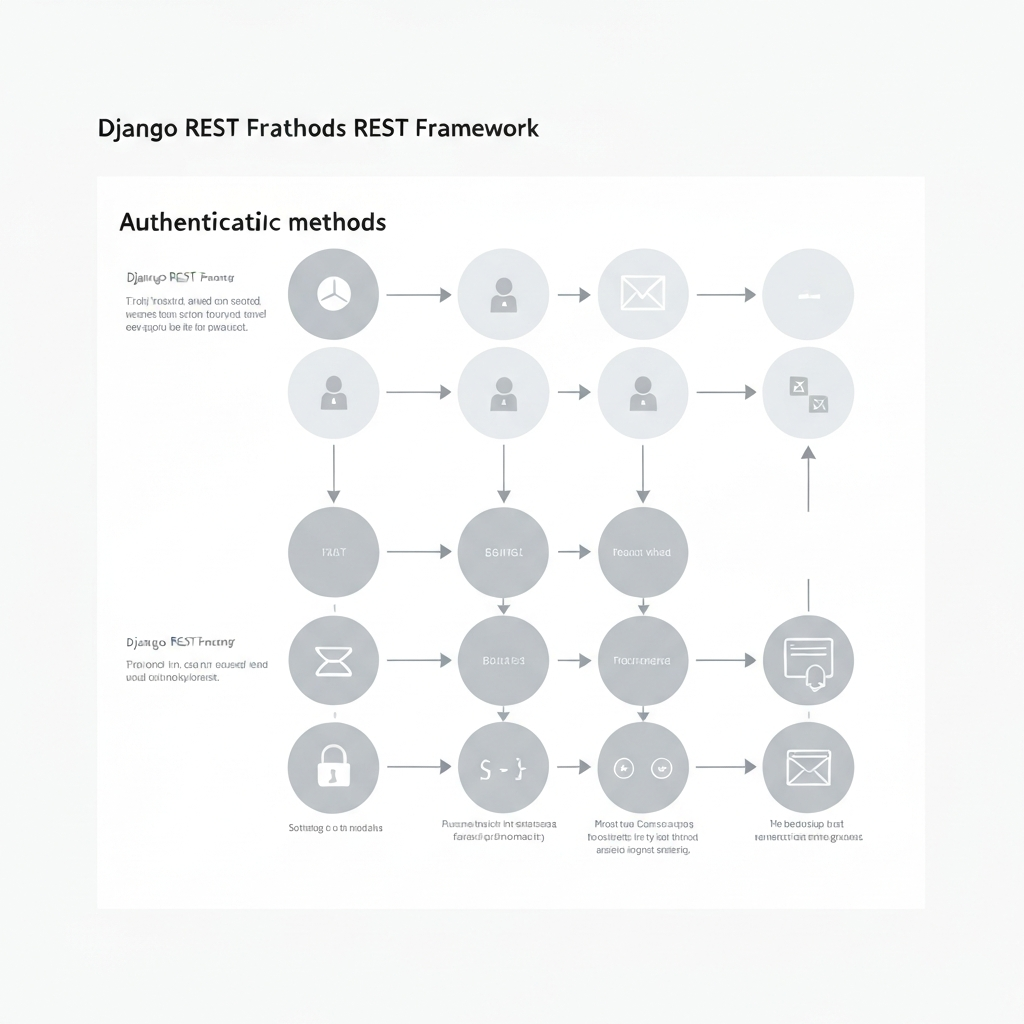
2. Common Authentication Schemes in DRF
Django REST Framework offers several built-in authentication schemes to cover a wide range of use cases. Each scheme has its own strengths and weaknesses, and the choice of which scheme to use depends on the specific requirements of your API and the clients that will be accessing it.
- Basic Authentication: Basic Authentication is one of the simplest authentication schemes. It involves sending the username and password in the `Authorization` header of the request, encoded in Base64. While easy to implement, Basic Authentication is not secure unless used over HTTPS, as the credentials are sent in plain text. Therefore, it is generally recommended to avoid Basic Authentication in production environments, especially when dealing with sensitive data. It's useful in development, testing, and internal APIs over secure networks.
- Session Authentication: Session Authentication relies on Django's built-in session management. When a user logs in through a web browser, Django creates a session and stores the session ID in a cookie. Subsequent requests from the same browser include this cookie, allowing DRF to authenticate the user based on the session ID. Session Authentication is suitable for web applications that use Django's session management and is enabled by default in DRF when `SESSION_AUTH` is in the `DEFAULT_AUTHENTICATION_CLASSES` setting. It's not ideal for APIs consumed by non-browser clients such as mobile apps.
- Token Authentication: Token Authentication involves issuing a unique token to each user, which they then include in the `Authorization` header of subsequent requests. DRF provides a `TokenAuthentication` class that can be used to implement this scheme. Token Authentication is more secure than Basic Authentication, as the token is not directly tied to the user's password. It's a good choice for APIs consumed by mobile apps or other non-browser clients. Consider using a more robust standard like JWTs.
3. Implementing JWT (JSON Web Token) Authentication
JSON Web Tokens (JWT) are a compact, URL-safe means of representing claims to be transferred between two parties. Use a well vetted open-source library for JWT authentication.
JWT Authentication is a popular and secure method for authenticating users in RESTful APIs. Unlike simple tokens, JWTs contain claims about the user, which can be verified by the server without needing to query a database. This makes JWTs a scalable and efficient authentication solution. To implement JWT authentication in DRF, you can use a third-party library like `djangorestframework-simplejwt`.
To implement JWT authentication, first install the `djangorestframework-simplejwt` package using pip. Then, configure the authentication classes in your DRF settings to include `rest_framework_simplejwt.authentication.JWTAuthentication`. You'll also need to add the necessary URL patterns for obtaining and refreshing JWTs. When a user logs in, your API should issue a JWT containing the user's ID and other relevant claims. Subsequent requests from the client should include this JWT in the `Authorization` header, typically prefixed with `Bearer`. The server can then verify the JWT's signature and extract the user's information without needing to access the database on every request.
Using JWTs provides several advantages over simple token authentication, including improved scalability and reduced database load. JWTs can also include custom claims, allowing you to store additional information about the user that can be used by your API. However, it's crucial to protect the secret key used to sign JWTs, as anyone with access to the key can forge valid tokens. Also, consider token expiration times and refresh token mechanisms to protect users from long-term credential theft. Remember to select a library that is well-maintained and widely-used to avoid introducing security vulnerabilities into your application. This approach enables a more robust authentication mechanism.
Conclusion
Authentication is a critical aspect of building secure RESTful APIs with Django REST Framework. By choosing the right authentication scheme and implementing it correctly, you can protect your API from unauthorized access and ensure the integrity of your data. The choice of authentication scheme depends on your API's specific requirements, the types of clients that will be accessing it, and the security considerations that are most important to you.
As API security threats continue to evolve, it's important to stay informed about the latest best practices and authentication methods. Consider exploring more advanced techniques such as OAuth 2.0 and multi-factor authentication to further enhance the security of your API. By prioritizing authentication and staying vigilant about security, you can build robust and trustworthy APIs that meet the needs of your users and protect your valuable data.
❓ Frequently Asked Questions (FAQ)
What are the key differences between Session Authentication and Token Authentication in DRF?
Session Authentication relies on Django's session management and cookies, making it suitable for browser-based applications. It's enabled by default and uses the standard Django session framework to verify user credentials. Token Authentication, on the other hand, uses unique tokens that are included in the request headers. This approach is more suitable for non-browser clients like mobile apps or external services, as it doesn't depend on cookies. Ultimately, the best choice depends on the types of clients accessing your API and the desired level of security.
How can I implement custom authentication in Django REST Framework?
To implement custom authentication, you need to create a class that inherits from `rest_framework.authentication.BaseAuthentication`. This class should override the `authenticate` method, which takes a request object as input and returns a tuple of `(user, auth)` if authentication is successful, or `None` if it fails. The `user` object represents the authenticated user, and the `auth` object can be any additional authentication-related data. Remember to also handle exceptions and return appropriate HTTP responses for authentication failures, such as 401 Unauthorized.
Is it safe to use Basic Authentication in a production API?
Basic Authentication is generally not recommended for production environments unless used over HTTPS. The username and password are encoded in Base64, which is easily decoded, making it vulnerable to interception if not transmitted securely. Even with HTTPS, Basic Authentication exposes credentials more directly than other methods. Consider using more secure authentication schemes like Token Authentication or JWT, especially when dealing with sensitive data. These alternatives offer better protection against credential theft and replay attacks.
Tags: #DjangoRESTFramework #Authentication #APIsecurity #Python #RESTfulAPI #JWT #BackendDevelopment
🔗 Recommended Reading
- Building Resilient Event Driven Backend Systems Architecting for Scalability and High Availability
- Optimizing React Renders with Memoization Hooks A Deep Dive for Senior Frontend Developers
- Multi Tenant Database Design for Scalable Applications A Deep Dive into Python Django FastAPI Node.js Backends
- Managing Database Concurrency for Scalable Backends A Deep Dive into Python, Node.js, and RESTful APIs
- Achieving Smooth React UI with Advanced Hooks A Deep Dive into Optimization