📖 5 min read
Authentication is the cornerstone of any secure API. Without proper authentication mechanisms, your API endpoints become vulnerable to unauthorized access, data breaches, and malicious attacks. Django REST Framework (DRF) provides a powerful and flexible set of tools to implement various authentication schemes, ranging from simple token-based authentication to more complex JSON Web Token (JWT) authentication and custom authentication backends. This deep dive will explore the intricacies of DRF authentication, providing practical examples and best practices to help you build secure and reliable APIs. We'll delve into the different authentication classes available, how to customize them to fit your specific needs, and how to handle common authentication challenges. From understanding the workflow to implementing custom solutions, this guide equips you with the knowledge to confidently secure your Django REST Framework APIs.
1. Understanding DRF Authentication Classes
Django REST Framework authentication is handled by authentication classes, which are responsible for authenticating incoming requests and providing the authenticated user and authentication credentials. These classes determine how the API identifies and verifies the identity of the client making the request. DRF offers several built-in authentication classes, each with its own strengths and weaknesses, and it also allows you to create custom authentication classes tailored to your specific requirements.
The primary authentication classes include `BasicAuthentication`, `TokenAuthentication`, `SessionAuthentication`, and `JWTAuthentication` (if using a JWT library). `BasicAuthentication` is suitable for development or internal APIs but should generally be avoided in production due to its lack of security. `TokenAuthentication` relies on unique tokens generated and assigned to users. `SessionAuthentication` leverages Django's built-in session management. `JWTAuthentication` uses JSON Web Tokens, a standard for securely transmitting information between parties as a JSON object.
When choosing an authentication class, consider the security requirements of your API, the complexity of implementation, and the scalability needs of your application. For example, `TokenAuthentication` is relatively simple to implement and provides good security for many use cases, while `JWTAuthentication` offers more advanced features like token expiration and custom claims, making it suitable for more complex applications. Remember to configure your `DEFAULT_AUTHENTICATION_CLASSES` setting appropriately in your `settings.py` file to apply these authentication classes globally.
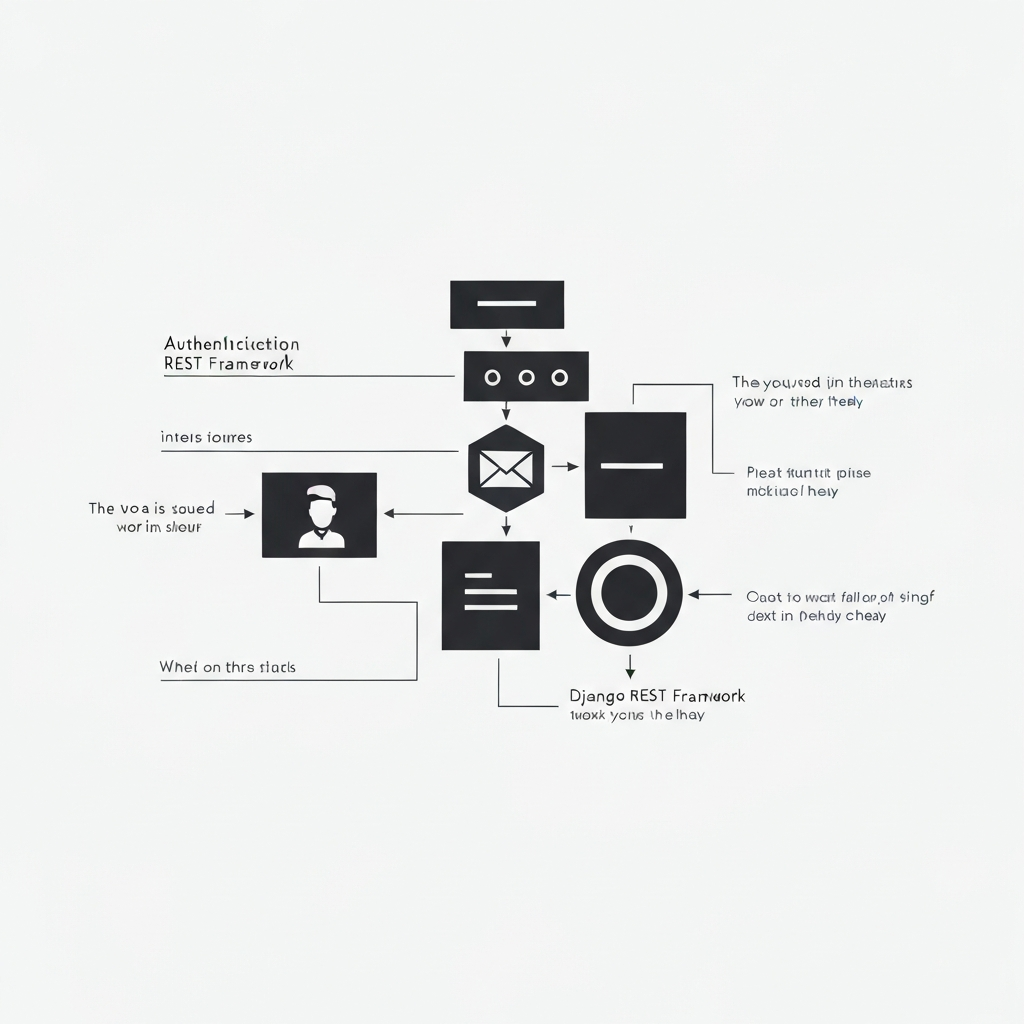
2. Implementing Token Authentication
Token Authentication is a simple yet effective method for authenticating API requests. It involves generating a unique token for each user and requiring that token to be included in the request headers. DRF provides built-in support for Token Authentication, making it easy to integrate into your Django projects.
- Generating Tokens: To generate tokens, you can use DRF's `Token` model. When a user is created (or logs in), a token can be automatically generated and associated with their account. This can be achieved by using Django's signals, specifically the `post_save` signal, to create a token whenever a new user is created. For instance, you can connect a receiver function to the `post_save` signal of the `User` model that creates a token instance if one doesn't already exist for the user. This ensures that every user automatically has a unique token assigned to them upon creation, streamlining the authentication process.
- Including Tokens in Requests: The client application must include the token in the `Authorization` header of each API request. The header should be formatted as `Authorization: Token
`. Many HTTP client libraries make it easy to set request headers. For example, using Python's `requests` library, you can set the header using the `headers` parameter in the `requests.get()` or `requests.post()` methods. Consistent use of the `Authorization` header is critical to ensure the DRF authentication middleware can correctly identify and authenticate the user making the request. - Securing Token Storage: It's crucial to store tokens securely. Never store tokens in plain text. Instead, consider encrypting tokens in the database or using a secure token storage solution. Implement proper access controls to limit who can access the token store. Regularly rotate tokens to minimize the impact of a compromised token. In addition, consider implementing token revocation mechanisms to invalidate tokens when necessary, such as when a user logs out or their account is compromised. This proactive approach to token management significantly enhances the overall security posture of your API.
3. Exploring JSON Web Token (JWT) Authentication
When using JWTs, remember to implement refresh tokens to improve the user experience and security. Refresh tokens allow you to issue new access tokens without requiring the user to re-authenticate.
JSON Web Tokens (JWT) are a standard for securely transmitting information between parties as a JSON object. They are commonly used for authentication because they are stateless, meaning the server doesn't need to store session information. This makes JWTs highly scalable and suitable for distributed systems. JWTs consist of three parts: a header, a payload, and a signature.
To implement JWT authentication in DRF, you'll typically use a third-party library like `djangorestframework-simplejwt`. This library provides the necessary authentication classes, serializers, and views to handle JWT creation, validation, and refresh. Configure the JWT settings in your `settings.py` file, including the token expiration time and signing key. Ensure that the signing key is kept secret and securely managed.
A significant advantage of JWTs is their ability to store custom claims, such as user roles or permissions, directly within the token. This allows the server to quickly access this information without needing to query the database for every request. JWTs offer a robust and scalable solution for authentication, especially in complex API environments. However, always be mindful of the token's expiration time and implement proper token revocation mechanisms when needed.
🔗 Recommended Reading
20260323-Database-Performance-Optimizing-Indexes-for-Django-and-FastAPI
Conclusion
Authentication is a critical aspect of building secure and reliable APIs with Django REST Framework. By understanding the different authentication classes available, such as Token Authentication and JWT Authentication, and implementing them correctly, you can protect your API endpoints from unauthorized access and data breaches. Remember to choose the authentication method that best suits your application's security requirements and scalability needs.
As APIs evolve and become more complex, staying up-to-date with the latest security best practices is essential. Explore advanced authentication techniques like multi-factor authentication (MFA) and OAuth 2.0 to further enhance the security of your APIs. Continuously monitor your API for potential vulnerabilities and adapt your authentication mechanisms as needed to address new threats. Staying proactive is key to maintaining a secure and trustworthy API environment.
❓ Frequently Asked Questions (FAQ)
What is the difference between SessionAuthentication and TokenAuthentication in DRF?
`SessionAuthentication` relies on Django's built-in session management, using cookies to maintain user sessions. It is well-suited for APIs that are consumed by web browsers, as it seamlessly integrates with Django's session handling. `TokenAuthentication`, on the other hand, uses unique tokens for authentication, which are typically included in the request headers. This makes it ideal for APIs consumed by mobile apps or other clients that don't support cookies. Therefore, the choice depends on the type of clients consuming your API and the desired level of security.
How can I implement custom authentication in Django REST Framework?
To implement custom authentication, you need to create a class that inherits from `rest_framework.authentication.BaseAuthentication`. Override the `authenticate(self, request)` method, which should return a tuple of `(user, auth)` if the authentication is successful, or `None` if it fails. The `user` is an instance of the Django `User` model, and `auth` is any optional authentication data. You can then add your custom authentication class to the `DEFAULT_AUTHENTICATION_CLASSES` setting or specify it in the `authentication_classes` attribute of a specific view. Remember to handle any exceptions gracefully within your `authenticate` method and return appropriate error responses.
What are some best practices for securing JWTs in Django REST Framework?
Securing JWTs involves several key practices. First, use a strong and securely managed signing key. Never expose this key in your code or version control. Implement refresh tokens to issue new access tokens without requiring re-authentication. Set a short expiration time for access tokens to minimize the window of opportunity for attackers. Consider implementing token revocation mechanisms to invalidate tokens when necessary. Always validate the JWT signature on the server-side to ensure its integrity and authenticity. By following these practices, you can significantly enhance the security of your JWT-based authentication system.
Tags: #DjangoRESTFramework #Authentication #APIsecurity #JWT #TokenAuthentication #Python #RESTfulAPI